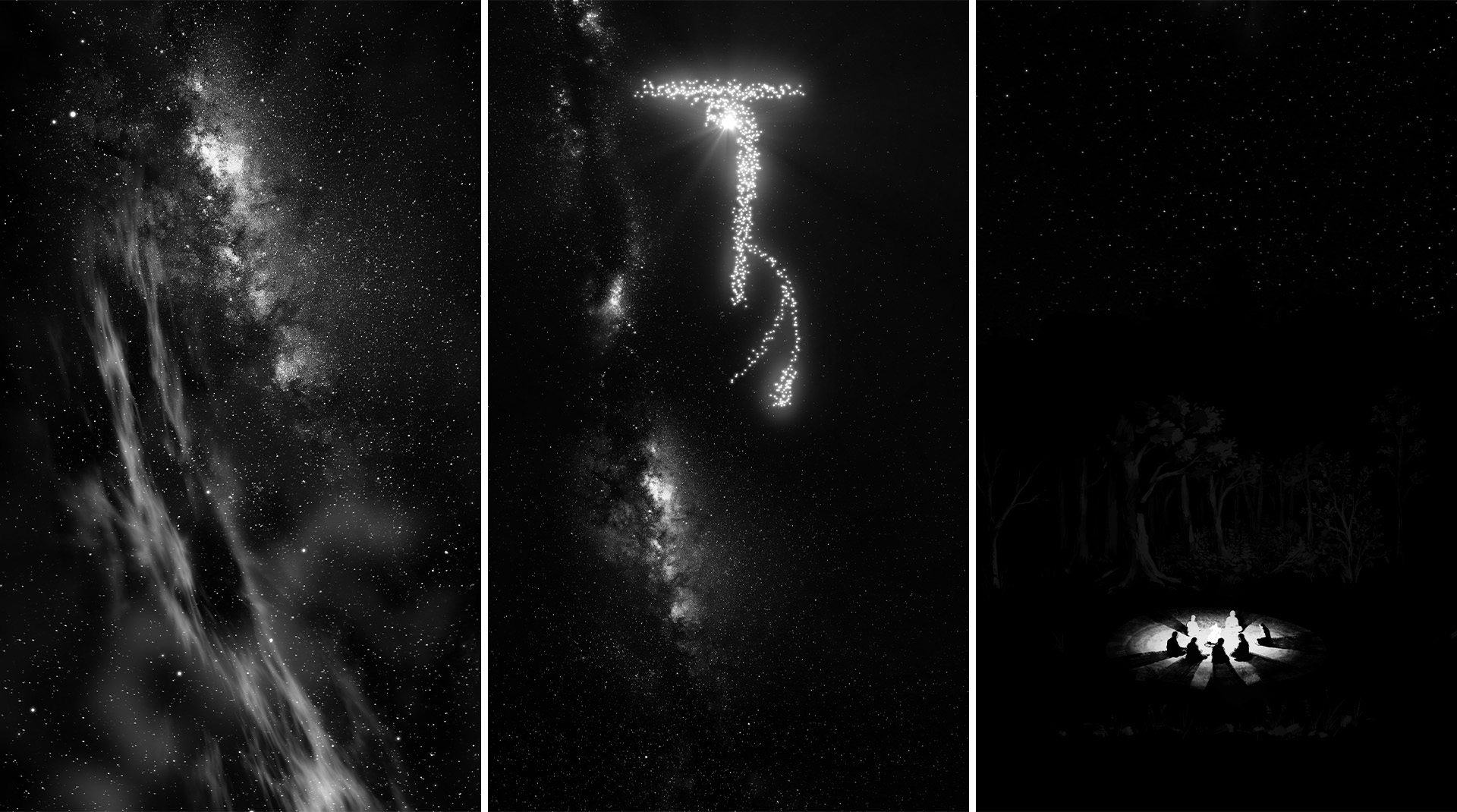
The choice to portray the tomahawk as a person is rooted in the artists’ backgrounds as Sámi and Tornedalian artists. Drawing on traditions in which an animistic worldview, where nature is understood as living, remains present, the artists explore how everyday objects such as axes and knives are treated with care and respect, and spoken of as though they were friends or relatives.
The work is composed of three interconnected elements: the moving image, the tomahawk's own narrative, and a soundtrack in what is believed to have been the tomahawk's mother tongue, Munsee.

Kristoffer Unga Pirak and Lina Johdet.
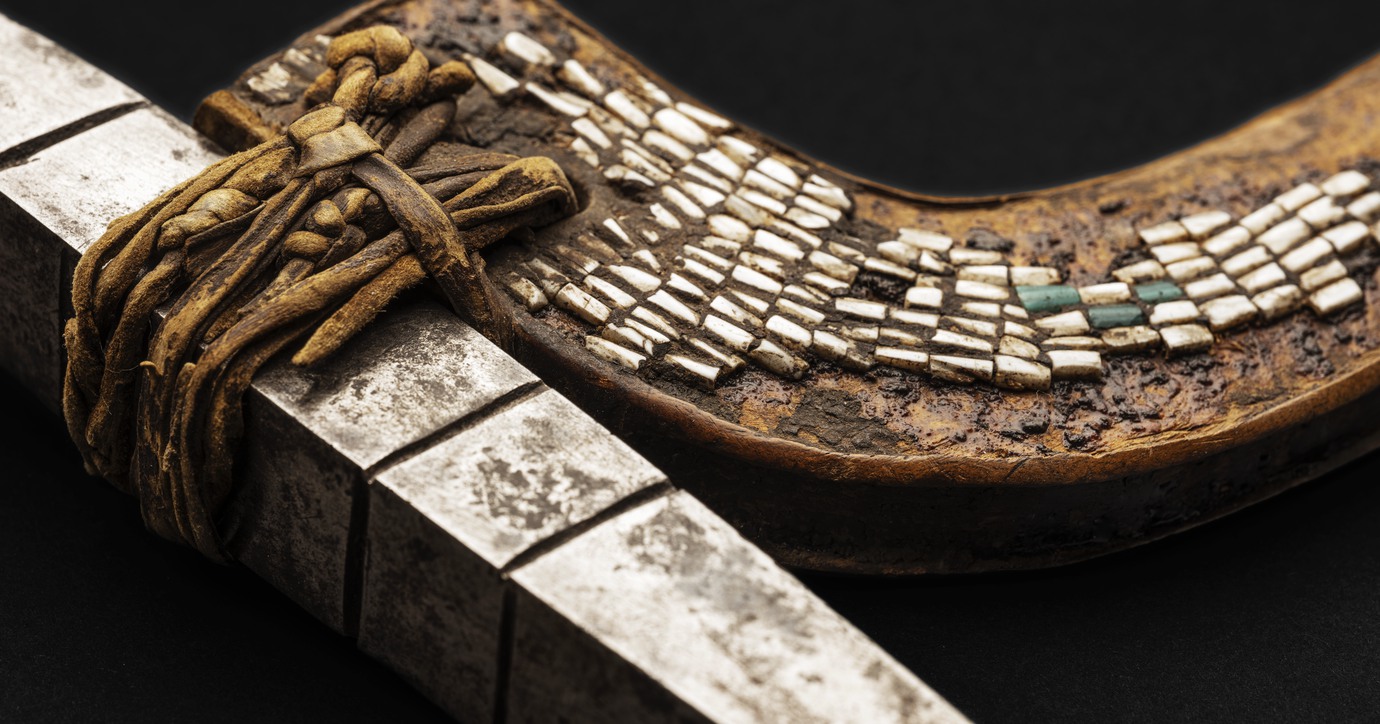
The film reflects on what happens when an object is removed from its original context. Can an object retain its meaning once it has been relocated to another continent and placed inside a museum display case? Whether once used as a practical tool or exchanged as a gift, the tomahawk now exists as a museum object. Through its own voice, the tomahawk reflects on this transformation while expressing a longing for the people and the place it once called home.
This installation was created within the National Museums of World Culture's project Bringing the Objects to Life, and Challenging the Museums' Colonial Histories. The project examines how Swedens and the museums' colonial histories and legacies continue to shape our present.